
How to Cook a Black Duck — And Why It’s Better Than What You’re Used To
If you just bought a Cayuga duck or another heritage black duck and you’re staring at it wondering what went wrong — nothing went wrong. That’s just what a real black duck looks like. The dark skin, the black speckling, the rich color of the meat — all of that is normal, natural, and actually a sign that you have something better than what you’d find at a grocery store. This post will tell you what you’re looking at, why it tastes different, and exactly how to cook it. Remember, you can buy Pekin ducks anywhere, but the USA Duck Team marketplace is one of the few places in the nation to buy Cayuga duck, or black duck meat.
What you’re seeing with black duck meat and why
Every duck, white or black, has filoplumes — fine hair-like feathers that remain after processing. On a white Pekin duck they’re invisible. On a Cayuga or other dark heritage breed they show up as black speckling on the skin. You’ve been eating them your whole life on grocery store duck without knowing it. They cook into the meat and contribute to the flavor. Leave them on, they are what makes the flavor special on black duck meat.
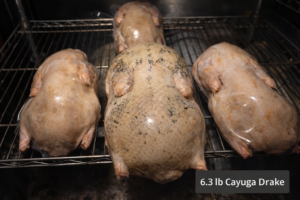
The dark skin color comes from the melanin in the breed, the same genetics that make the feathers iridescent green-black. It has nothing to do with how the bird was processed or how fresh it is. A fresh heritage duck smells clean and mild, just like any fresh poultry. The black duck meat is richer, more flavorful, more like beef or venison than white ducks.
Why heritage duck tastes different
Grocery store duck is almost always Pekin — a breed developed specifically for fast growth and mild flavor. Heritage breeds like Cayuga are older genetics, slower growing, more active, and they taste like it. The flavor is closer to beef than chicken — rich, deep, and savory with more complexity than a commercial bird.
Our flock is pasture raised on local feed in Kansas City, Kansas, and processed at 8-12 weeks. That combination of genetics, movement, and diet is what makes the difference on the plate.
How to roast a whole black duck
The goal is crispy rendered skin and tender meat. Don’t be afraid of pink — heritage duck is safe and traditionally served medium, not well done.
The night before or at least an hour ahead, pat the duck completely dry and leave it uncovered in the fridge. Dry skin crisps better.
Score the skin in a crosshatch pattern with a knife — just the skin, not into the meat. This helps the fat render out. Rub the whole bird with salt and pepper. Add garlic and fresh thyme in the cavity if you have them. USA Duck Team also sells duck rub spice kits.
Roast at 425°F breast side up for 30 minutes, then reduce to 350°F for another 30 minutes. Use a meat thermometer — you’re aiming for 130-135°F in the thickest part of the thigh. Rest for 20 minutes before carving. The temperature will continue rising during the rest.
Duck breast as steak
This is the fastest and most impressive way to cook heritage duck. De-boned breast, skin side down in a cold cast iron pan, heat to medium. Cook skin side down for 6-7 minutes with a weight on top until the skin is deep golden and crispy. Flip and sear 30 seconds. Rest 2 minutes. Internal temperature of 125-130°F. Use your favorite steak seasoning — the flavor profile is that close to beef.
The rendered fat left in the pan is liquid gold. Cook potatoes, greens, or a thick slice of bread in it.
What to serve with it
Think beef, not chicken. Duck loves fruit sauces — plum, cherry, blackberry, aronia berry. It loves bold sides — roasted root vegetables, braised cabbage with apple, garlic mashed potatoes, crusty bread to soak up the pan juices. A simple pan gravy from the drippings takes 5 minutes and makes the whole meal.
Also, keep in mind that black duck is different at different ages.
8-12 week ducklings — young, tender, fat under the skin, medium rare works beautifully, fast cook times, this is what the above recipie is designed for. This is primarily what we sell at USA Duck Team for our meat.
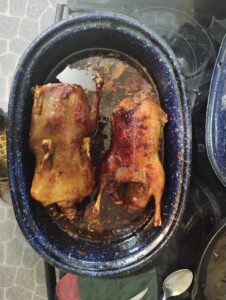
Pasture-raised older birds or yard drakes — more muscle development, more connective tissue, less subcutaneous fat, medium rare leaves them rubbery because the collagen hasn’t had time to break down. These need low and slow — braising, confit, or a long slow roast that converts collagen to gelatin. That’s actually what makes them more flavorful, not less. These are great for duck soup, very flavorful. Cook them closer to 180, and use moist heat on them. These are working birds with developed muscle. You’re essentially cooking a different animal. The stroganoff, cacciatore, and rillette recipes in the cookbook are actually the right approach for these birds — long braise, shredded or slow cooked. The image above shows a fat duckling next to two older yard drakes, and you can see the difference in composition in the image.
Get the full black duck cookbook free
Jennifer Reynolds, our anchor producer in Springfield MO, wrote a complete heritage duck and rabbit cookbook with recipes for duck stroganoff, duck burgers with chicharrone bacon, duck stock, egg dishes, and more. Download it free at the link below — no email required, no signup, just good recipes.
Where to get heritage duck
We sell whole heritage ducks, hatching eggs, and ducklings through our producer network marketplace. You can just search the map for a farm near you and schedule a local pickup.
[SHOP USA DUCK TEAM MARKETPLACE]
Corinna West, Managing Member, USA Duck Team LLC — NPIP #529, Kansas City KS