If you’ve ever wondered why some hatches go beautifully and others disappoint — same incubator, same settings, same flock — the answer might be simpler than you think. It might be the hen.
One breeding season, we did something unusual. We sorted every egg in our Cayuga flock by the individual hen who laid it, tracked them all the way through incubation, and recorded which ones hatched. The results were some of the most interesting data we’ve produced at USA Duck Team — and they have real implications for anyone serious about hatching Cayuga eggs.
The Challenge: Figuring Out Which Hen Laid Which Egg
Cayuga ducks are famous for their egg color variation. Early in the laying season, eggs can be nearly black. As the season progresses, the same hen’s eggs lighten — moving through charcoal gray, slate, olive, and sometimes all the way to white or cream by fall. This color change happens because the dark pigment in the shell is a finite supply that gets “used up” over the course of the season.
What we noticed is that while all Cayuga eggs change color over the season, different hens produce distinctly different colors and patterns at any given time. Some hens lay darker eggs. Some lay lighter. Some produce eggs with a chalky bloom, others lay smooth and glossy shells. The size and shape varies too.
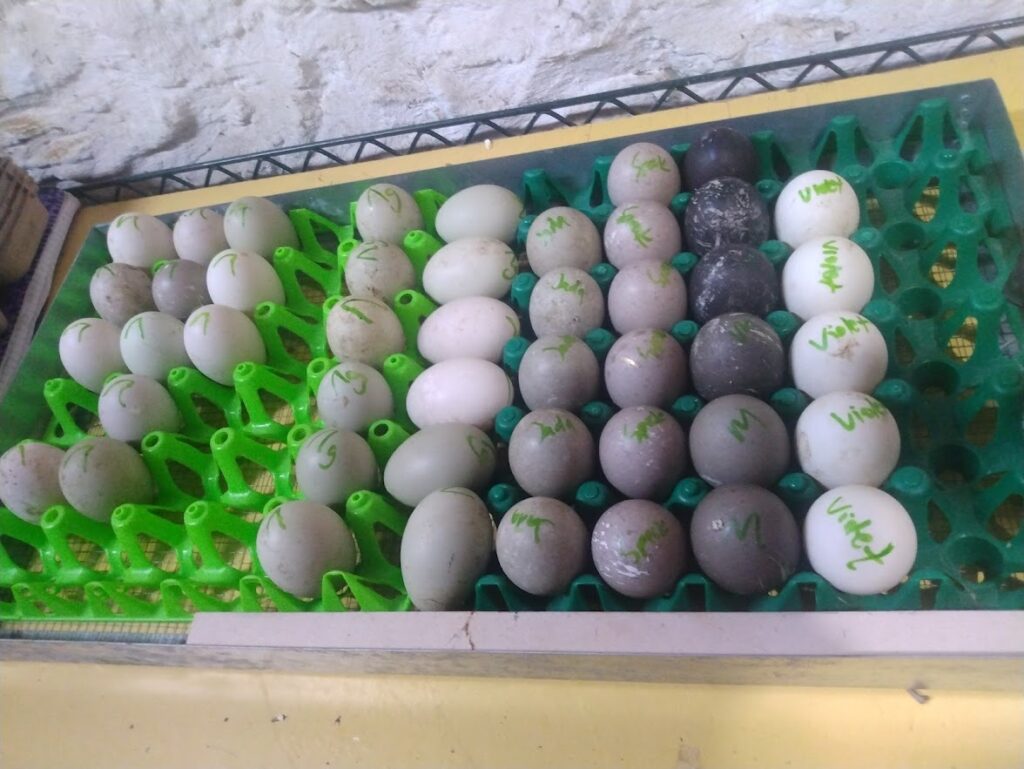
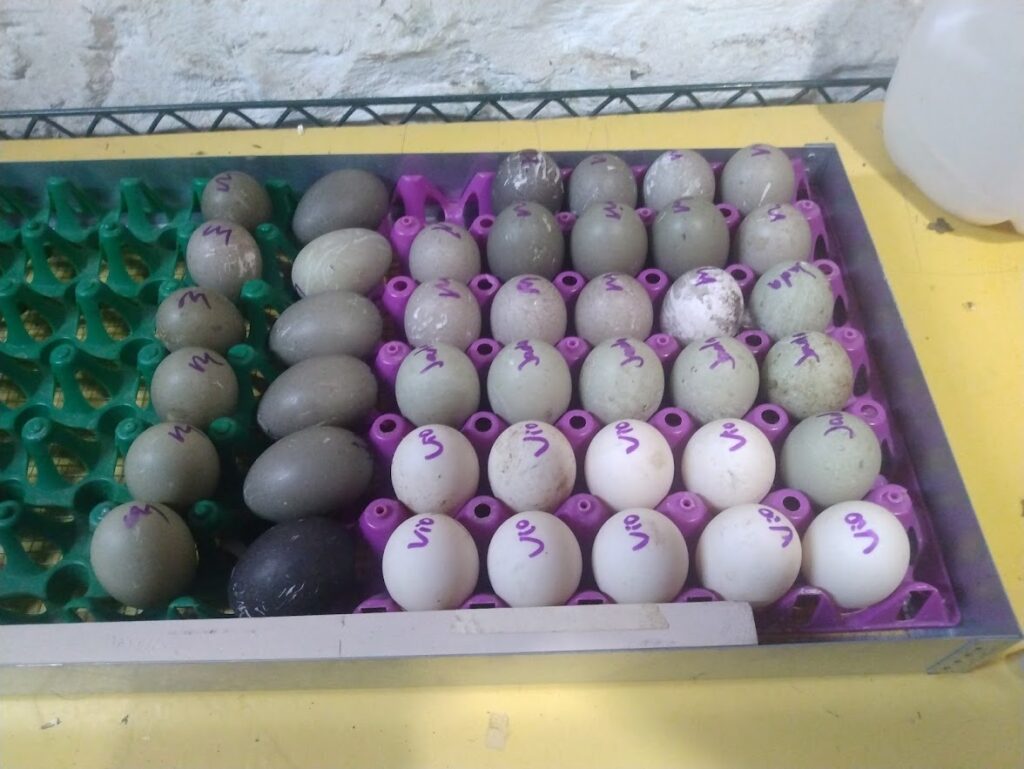
We used this natural variation to our advantage. We figured this out by carefully observing which hens were laying which eggs. We did that by separating hens into different sections of the coop at night when they were laying. We did this over several week in different combinations until we could identify each hen’s eggs with confidence. Then we were able to mark every egg with the hen’s name before it went into the incubator.
It took patience. We’d lock two or three hens into one section of the coop overnight and collect eggs in the morning, then cross-reference color and shape to confirm which hen laid which. Once we were confident in each hen’s “signature,” we marked eggs in pencil or marker as they came out.
—
The Data: Same Flock, Same Drake, Very Different Results
Once we had a full season of eggs tracked by hen, the hatch rate differences were striking All hens shared the same living conditions, the same drake, and the same incubation setup.
Here’s what the data showed for our Maps Pen flock in 2024:
- Speck: 57%** hatch rate (29 hatched out of 51 fertile eggs)
- Violet: 50%** (27/54)
- Jada: 50%** (12/24)
- Big Shiny: 42%** (8/19)
- Pinkie: 35%** (18/52)
- Goldie: 31%** (10/32)
- Mrs. Piggie: 0%** (0/8 — small sample, likely a one-season anomaly)
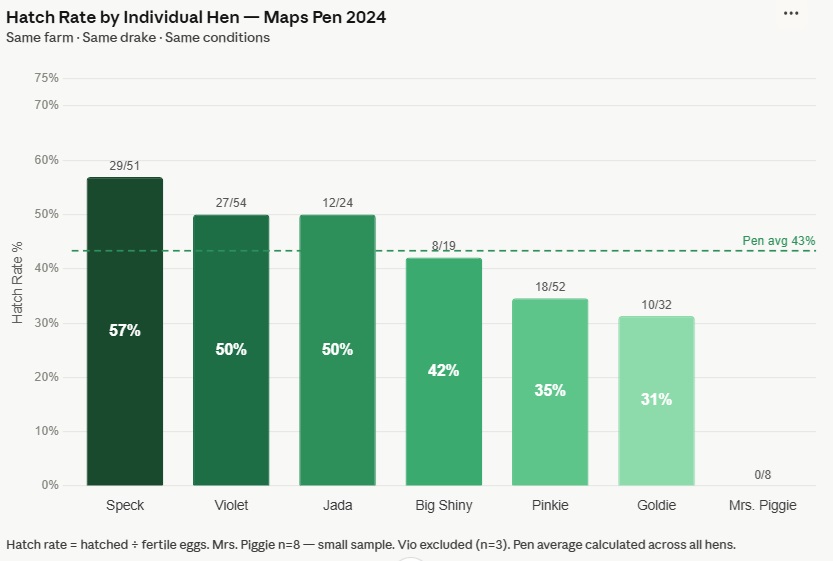
The pen average was 43%. But Speck was hatching at 57% while Goldie was at 31% — a difference of 26 percentage points, in the same pen, with the same drake, under identical conditions.
This tells us something important: **hatch rate is partly a genetic trait of the hen.**
What This Means for Breeding
If hatch rate is heritable — and this data strongly suggests it is — then selecting breeding hens based on their hatch rate history is a legitimate and valuable practice. At USA Duck Team, we keep detailed records on our hens across multiple seasons. Hens like Speck and Violet, who consistently produce high fertility and good hatch rates, are the hens we prioritize for our breeding program. Their daughters are more likely to be good producers in both egg laying and hatchability.
Hens like Mrs. Piggie, who had zero hatch in a small sample, may have had a one-season fertility issue rather than a genetic one. We’d want multiple seasons of data before drawing conclusions. But a hen who consistently underperforms on hatch rate over multiple seasons is a hen we’d cull from the breeding flock, regardless of how she looks on the show table.
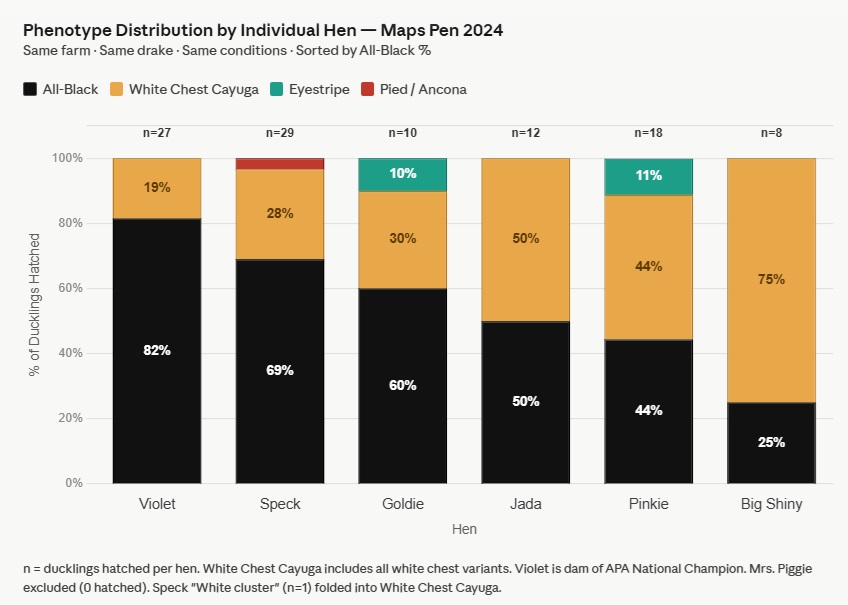
This is one of the ways that tracking data — even informally, with a pencil and a notebook — makes you a better breeder over time. We also measured phenotype by hen and found that each hen was producing very different ducklings. For an explanation of the white chest and the eyestripe Cayuga, check out our post on eggshell color.
Why Cayuga Egg Color Makes This Research Possible
It’s worth noting that this type of hen-level tracking is easier with Cayugas than with almost any other duck breed, precisely because of their remarkable egg color variation. If all your eggs looked the same, separating them by hen would require individual pen setups for every bird — a major logistical challenge.
With Cayugas, the eggs themselves often tell you who laid them, once you learn your flock. A hen who consistently lays a long, narrow egg with a greenish bloom is identifiable without any complicated setup. The color variation that makes Cayuga eggs so visually striking turns out to be a useful research tool.
How to Try This on Your Own Farm
If you want to track hatch rate by hen in your own Cayuga flock, here’s the basic approach:
1. Observe egg variation in your flock. Spend a week or two watching which hens spend time in the nest boxes and noting what the eggs look like each day.
2. Separate hens in small groups. Put 2–3 hens in a section of the coop overnight and collect eggs in the morning. This narrows down which eggs came from which birds.
3. Mark eggs as they come out. Use a pencil or Sharpie to write the hen’s name or a code on each egg as soon as you collect it and before it goes into the incubator.
4. Track through to hatch. Record which marked eggs hatch and which don’t. Candling at day 7–10 will tell you which eggs were fertile.
5. Build your records over time. One season is interesting. Multiple seasons is actionable breeding data.
You don’t need a spreadsheet or special software. A simple notebook with columns for hen name, eggs set, fertile eggs (after candling), and eggs hatched is enough to start building a picture of your flock’s genetics.
About This Research
This data was collected at USA Duck Team’s headquarters flock in Kansas City, KS as part of our ongoing work to document Cayuga duck genetics and hatchery performance. Our network of farms is supported in part by a North Central SARE Farmer/Rancher Grant (FNC25-1484). We track egg production, hatch rates, and genetic outcomes across our breeding lines to help improve the quality of Cayuga stock available to homesteaders and small farms across the Midwest and beyond.
If you’re interested in hatching Cayuga eggs from our breeding lines — including descendants of Speck, Violet, and Jada — visit our farm listings at [usaduckteam.com](https://usaduckteam.com) or contact us directly.
USA Duck Team is a network of heritage duck farms across Missouri and Kansas. We specialize in Cayuga ducks and support small and beginning farmers with genetics, hatchery training, and direct market access. Our work is funded in part by North Central SARE Grant FNC25-1484 and supported by the Lincoln University Innovative Small Farmers Outreach Program.*
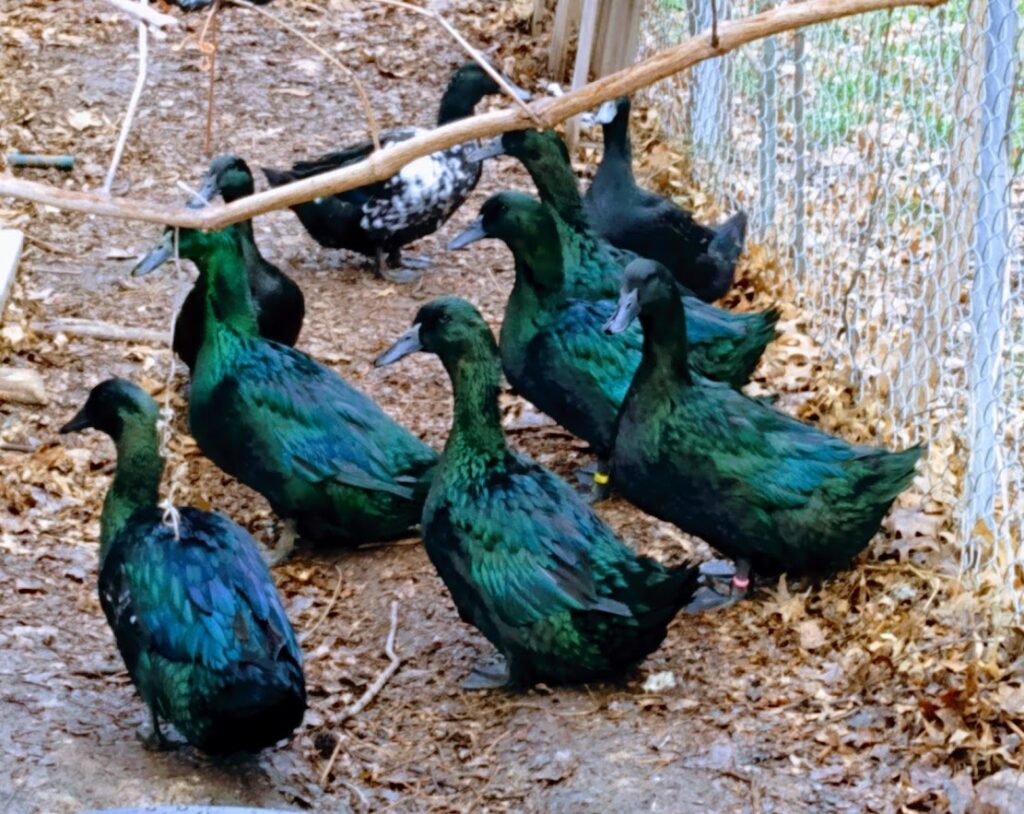
Here’s all our girls:
Pinkie has the pink legband on the right, Goldie has the yellow legband behind her, Big shiny is behind Goldie, Miss Piggy is the fat one in front center, Jada is front left, and Violet and Speck are in the back. Speck has all the white on her.